Showing posts with label silliman university. Show all posts

Monday, December 08, 2025


Another reason to thank the Silliman University National Writers Workshop (SUNWW). Just happy to be part of this growing community. And here are a few factoids about how this thing—the oldest creative writing workshop in Asia—became so intertwined with my life.

🔸 I applied twice. First, as a poetry fellow in 2007. Rejected. The following year, I put together some stories and applied for fiction. That did it. I got into the 47th batch of writing fellows. I was 19.

🔸My co-fellows were Lawrence Anthony Bernabe, Noelle Leslie dela Cruz, Ma. Celeste Fusilero, Rodrigo “Igor” dela Peña, Arlene Jaguit Yandug, Bron Joseph Teves, Marguerite “Margie” Alcazaren de Leon, Dustin Edward Celestino, Joshua “Tokwa” Lim So, Liza Bacay, Ma. Elena Paulma, Anna Carmela Tolentino, and Lamberto Varias Jr.

🔸On Day 1, National Artist for Literature and workshop co-founder Edith Lopez Tiempo herself opened the first panel, discussing Noelle’s poem.

🔸 Our panelists were Ernesto Superal Yee, Bobby Flores Villasis, Myrna Peña Reyes, Cesar Ruiz Aquino, Dr. Rowena Tiempo Torrevillas, Jose “Butch” Dalisay, Butch Macansantos, Dave Genotiva, Susan Lara, Danny Reyes, Anthony Tan, and Lito Zulueta.

🔸 I remember being in awe of everyone—sharp, talented, articulate—while I was just there soaking everything in. But one co-fellow stood out in particular. Back then, the workshop ran for three weeks, each devoted to a genre: poetry, fiction, and creative nonfiction. There were 15 fellows, five per genre. Except in 2008, we were only 14. It turned out one fellow had applied to all three genres, and the screening committee found all his manuscripts strong enough to represent each genre for discussion. So he had a slot every single week. His name is Lambert. And then he disappeared from the grid. I still don’t know where he is.

🔸 There were days when we arrived late to KH 1, the room in Katipunan Hall where most sessions were held, and the running joke among panelists was that our nights were long and bacchanalian. To prove we weren’t drunk every night (just “every other night,” as Liza put it), we decided to make a book of new works to give the panelists and organizers on culmination night. Just so we can say we did some new writing during our stay. 

🔸 That book became Sea[sic]: Prose and Poetry by the Fellows of the 47th Silliman University National Writers Workshop. It was launched at Hayahay on Escaño Road during the final night of the workshop. People were so thrilled to receive a copy that they decided right there and then that future batches should also produce a book of new works. What started as our simple thank-you gift is now a workshop requirement. Peace to all future fellows. We didn’t mean to give you an extra task.

🔸 We call our batch the Katsubongs, after one memorable trip from Bacong. I wrote about it for the workshop’s 50th anniversary in 2011 (link here: https://su.edu.ph/137-drugged-and-still-drugged/). 

🔸 We spent a night at Salagdoong Beach in Siquijor. Literally slept in the huts by the shore, waking up to sunlight and sea breeze, practically ignoring the hotel rooms we had rented.

🔸 Seventeen years later, we’re still in touch, jumping from Yahoo Groups to Facebook to Messenger. A little older, maybe wiser, but still here, and I am still in awe of what have transpired. Still thankful. 

Borrowed the image above from the official Facebook page of the SUNWW. You can check out the original post here.

Friday, December 05, 2025

honored


It’s a rainy gloomy Friday morning here in the Visayas, with Tropical Depression Wilma looming over us, but there is also a bit of light with good news like this. 

Thank you, Silliman University, especially to the Silliman University English and Literature Department and The Edilberto and Edith Tiempo Creative Writing Center. As the sole creative writing major in my last two college years, I thought it would be an extra lonely journey, but here we are. I was wrong.

Borrowed the image above from the Silliman University website. You can read the full article through this link


Sunday, October 19, 2025

happy sunday

There’s never a shortage of things to do, even on weekends, but there’s also plenty to be grateful for. Kaliwat ni Karyapa, organizer of the 4th edition of the Tagik Poetry Writing Competition and Kinalitkalit Flash Fiction Writing Competition, made possible with the support of the Provincial Government of Bohol’s Center for Culture & Arts Development (CCAD) through the Bohol Arts and Cultural Heritage (BACH) Council–Literary Arts Committee, has gathered over 142 entries from 107 Bol-anon writers this year.

As lead project coordinator, just finished formatting the shortlist and sending score sheets to all six judges. There’s a lot of exciting work in this batch.

I also got a bit of surprising news today, something I never imagined I’d be hearing in this lifetime. The ink hasn’t dried yet, but the news alone feels like enough fuel to keep me going for the rest of the year.

Still, somewhere between the busyness, I found a quiet moment this morning to reflect. Maybe when you’re genuinely happy for other people’s successes and at peace with what you love doing, your own time will come too. All in due time, always.

Tonight, it’s back to work on an essay due also tonight! Crazy, but all good. Thank you, dear cosmos, for the strength. 

[ More photos here ]

Wednesday, October 08, 2025

teatro sillimaniana dos

Last Saturday, October 4, dropped by the Woodward Little Theater to catch Teatro Sillimaniana Dos, a series of award-winning plays by Silliman playwrights, directed by the SU Speech and Theatre Department’s senior class.

The last time I was in this black box theater was in college. Good to see it still alive and pulsing with the energy of the community’s creatives.

Two plays by friends were staged that night. First was Ian Rosales Casocot’s The Midsummer of Manuel Arguilla, directed by Merliel Natad Putong. It is a 2023 Palanca-winning one-act reimagining the famous short story writer’s final hours before his execution in 1944. His wife Lydia tries to visit but never gets to see him, speaking only with his fellow prisoner Leon. After torture, Manuel clings to stories to endure, recalling his own “Midsummer.” In the end, Lydia reveals the story’s deeper truth. Lady Lorraine Elmido as Ading was a standout. She was sharp, sly, and fully in control of the story’s rhythm.

Then came Rolin Migyuel Olina’s The Late Mister Real, directed by Jefferson M. Balandra. And my golly, I wasn’t prepared. Set in a COVID-19 quarantine facility, it reunites ex-spouses Boyet and Raquel after years apart. It begins as awkward small talks and then unravels into humor, pain, and lingering regret. Some wounds and the choices that cause them truly never heal. Justine Lawrence Lopez and Julianne Andrea Oyao were phenomenal. No surprise Rolin’s play made it to CCP’s Virgin Labfest XX this year.

Watching both made me wish I could write like that. Plays are a different breed. I wrote one in college and buried it somewhere no one will find. Still, there’s something about theater, how silence and subtext can speak louder than dialogue. Hmmm. I’ll think about it.

There’s more coming from Teatro Sillimaniana Dos this Friday and Saturday. You might want to catch them.

Sunday, November 17, 2019

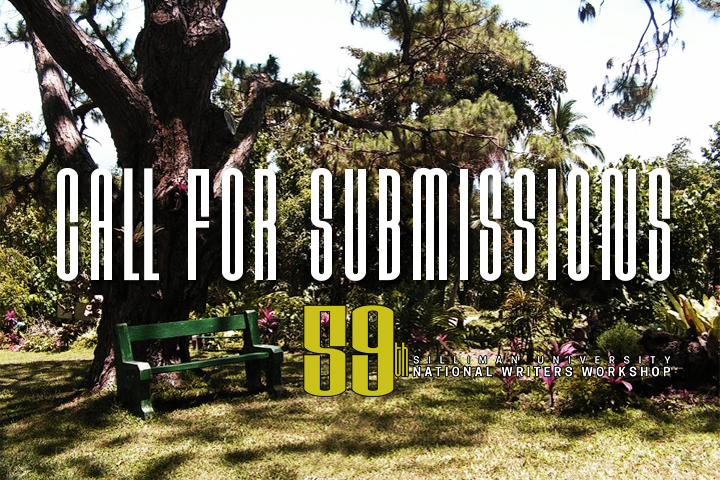
call for manuscripts to the 59th silliman university national writers workshop


The Silliman University National Writers Workshop is now accepting applications for the 59th Silliman University National Writers Workshop to be held from 27 April to 8 May 2020 at the Silliman University Rose Lamb Sobrepeña Writers Village and the Silliman University campus.

This Writers Workshop is offering ten fellowships to promising writers in the Philippines who want to have a chance to hone their craft and refine their style. Fellows will be provided housing, a modest stipend, and a subsidy to partially defray costs of their transportation.

To be considered, applicants should submit manuscripts on or before 6 December 2019. (Extension to the deadline will not be made.) All manuscripts should comply with the instructions stated below. (Failure to do so will automatically eliminate their entries).

Applicants for Fiction and Creative Nonfiction fellowships should submit three to four (3-4) entries. Applicants for Poetry fellowships should submit a suite of seven to ten (7-10) poems. Applicants for Drama fellowships should submit at least one (1) One-Act Play. Each fiction, creative nonfiction, or drama manuscript should not be more than 20 pages, double-spaced. We encourage you to stay well below the 20 pages. Aside from manuscripts in Poetry, Fiction, Creative Nonfiction, and Drama that should be written in English, the Workshop will also be accepting manuscripts for Balak (poetry in Binisaya) and Sugilanon [short story in Binisaya]. Applicants should submit a suite of seven to ten (7-10) balak entries with their English translations, or three to four (3-4) sugilanon entries with their English translations.

Manuscripts should be submitted in five (5) hard copies. They should be computerized in MS Word, double-spaced, on 8.5 x 11 inches bond paper, with approximately one-inch margin on all sides. Please indicate the category (FICTION, CREATIVE NONFICTION, POETRY, ONE-ACT DRAMA, BALAK, or SUGILANON) immediately under the title. The page number must be typed consecutively (e.g., 1 of 30, 2 of 30, and so on) at the center of the bottom margin of each page. The font should be Book Antiqua or Palatino, and the font size should be 12.

The applicant’s real name and address must appear only in the official application form and the certification of originality of works, and must not appear on the manuscripts. Manuscripts should be accompanied by the official application form, a notarized certification of originality of works, and at least one letter of recommendation from a literature professor or an established writer. All requirements must be complete at the time of submission.

Send all applications or requests for information to the Department of English and Literature, attention Dr. Warlito Caturay Jr., Workshop Coordinator, 1/F Katipunan Hall, Silliman University, 6200 Dumaguete City. For inquiries, email us at nww@su.edu.ph or call 035-422-6002 loc. 350.

[ photo borrowed from this site ].

Saturday, March 02, 2019

58th silliman university national writers workshop fellows

Silliman University, together with the National Commission for the Culture and the Arts, presents the 58th edition of the Silliman University National Writers Workshop on April 29 to May 10 at the Rose Lamb Sobrepeña Writers Village in Camp Look-out, Valencia, Negros Oriental and the SU Campus. Here are the 10 writing fellows of Batch 2019:

Poetry
Arielle Abrigo (Antipolo City)
Alsteine Diapana (Cebu City)

Balak
Jefferson Del Rosario (Danao City)
Dave Pregoner (Lapu-Lapu City)

Fiction 
Kaisa Aquino (Quezon City)
Catherina Dario (Muntinlupa City)
Samuel Evardone (Metro Manila)

Creative Nonfiction
Donna Patricia Manio (Imus City)
Cavite Riddick Recoter (Metro Manila)
Maria Gliceria Valdez (Davao City)

Tara Eunice de Leon and Jhudiel Brigid Plando will join them as special fellows for fiction and nonfiction respectively. Two applicants have also been invited as special workshop mentees: Alter Hofileña (Misamis Occidental) and Geormie Yanoc (Mabinay, Negros Oriental).

The panel of writers/critics for this year includes Director-in-Residence Anthony Tan, resident writers Cesar Ruiz Aquino and Ian Rosales Casocot, as well as regular panelists Alfred Yuson and Marjorie Evasco. They will be joined by guest panelists Rica Bolipata-Santos, Simeon Dumdum Jr., Susan Lara, Grace Monte de Ramos, and National Artist for Literature Resil Mojares.

Beginning last year, the Workshop has been accepting manuscripts for Balak (poetry in Binisaya) with corresponding English translation. The inclusion of Balak has further enriched workshop discussion regarding the craft of poetry rendered in different languages and the cultural nuances that underpin such expression.

Founded in 1962 by S.E.A. Write Awardee Edilberto K. Tiempo and National Artist Edith L. Tiempo, the workshop is the oldest creative writing workshop of its kind in Asia. It was recently given the Tanging Parangal in the Gawad CCP Para sa Sining by the Cultural Center of the Philippines. The Silliman University National Writers Workshop continues the legacy of the Tiempos in giving value to literature and creative writing in the Philippines.

For more information about forthcoming events during the workshop, e-mail Workshop Coordinator Lady Flor Partosa at nww@su.edu.ph or call the Department of English and Literature at (035) 422-6002 loc. 350.  

[ article lifted from the Edilberto and Edith Tiempo Creative Writing Center Facebook page ]

Thursday, June 21, 2018

my baby


Finally. After weeks of preparation and unloading buckets of anxiety, let me introduce you to my first baby: Weights & Cushions, a chapbook of poetry by yours truly.

Most of the poems are first written sometime between 2007 and 2012, and most of them are previously featured in zines, journals, magazines and literary reviews like Dark Blue Southern Seas, Montage, Philippines Free Press, Philippines Graphic, and Quarterly Literary Review Singapore.

Fresh off the printers this morning are 30 copies—20 of which are going to Dumaguete for Silliman University's LGBTQ Zine and Book Fest on June 25, 2018 (Monday) at the SU Main Library, starting at 10AM. The remaining 10 copies would be for people within my perimeters who would think of getting one. If I’d run out of copies, I’d publish another set for you.


I am selling these for P200 each. A bit pricey, I know, because working things on your own turned out to be laborious and costly. (Shipping costs will also be shouldered by the buyer; which is P100 for shipments around the Philippines).

If you want to support and help out a local writer trying to sell his goods that he has worked with sweat and blood, feel free to drop me a message personally. Feed an artist and get him to pay the bills on time. Trust me, you are doing something good with your purchase. Hehe.

Wednesday, April 22, 2015

happy birthday, mom.


I never knew then that this would be the last time I’d be seeing this elegant woman next to me in the photo above. That is Edith Lopez Tiempo. This was in 2011, during one of the many nightly events in celebration of the 50th anniversary of the Silliman University National Writers Workshop, the oldest creative writing workshop in Asia she founded with her husband Edilberto Tiempo. She was 92 then but she always seemed so strong, full of life and humor. We had a small chat and I was amazed that she could still recall my name after so many years. That is her gift among many others, and the gift she has shared to us is this deep understanding of passion in literature and, basically, life which will always be remembered. There is a reason why we call her Mom; she is not only a National Artist, not only a teacher, but also a gentle nurturer of timeless wisdom. She offered criticism but never judgment, she provided insight and never insult. She is a life changer—especially to the person writing this blog entry. In a journal I had her autographed on back in 2008, she wrote, “Jordan. How proud I am to have a writer who is biblically approved.” Well, Mom, I am also biblically thankful. Happy birthday once again.

Wednesday, March 18, 2015

54th silliman university national writers workshop fellows


The family tree continues to grow. Congratulations and welcome to the literary brood!

*

The 54th edition of the Silliman University National Writers Workshop is slated to start on 11 May 2015 at the Rose Lamb Sobrepeña Writers Village in Camp Look-out, Valencia, Negros Oriental. The workshop closes on May 29.

Twelve writers from all over the Philippines have been accepted as regular workshop fellows.

Fellows for Poetry

Aimee Paulette O. Cando (University of Santo Tomas)
Angela Gabriele R. Fabunan (University of the Philippines-Diliman)
Darylle Luzarita Rubino (University of the Philippines-Mindanao)
Mohammad Nassefh R. Macla (University of the Philippines-Mindanao)

Fellows for Fiction

Luis Manuel Diores (University of San Carlos)
Patricia Corazon F. Lim (Ateneo de Manila University)
Kristine Abelink Patenio (University of St. La Salle-Bacolod)
Rodolfo Eduardo T. Santiago (Ateneo de Manila University)

Fellows for Creative Nonfiction

Jona Branzuela Bering (Cebu Normal University)
Rowena Rose M. Lee (University of the Philippines-Mindanao)
Miguel Antonio Lizada (National University of Singapore)
Edmark Tejarcio Tan (University of Santo Tomas)


Khail Campos Santia of Malaybalay, Bukidnon (Silliman University) will join them as a special fellow for poetry. The names of other special fellows from around the Asia-Pacific region will be announced later.

Four alternates have also been chosen in case any of the regular fellows declines the invitation: Christian Jil R. Benitez of San Mateo, Rizal (Ateneo de Manila University) for poetry, Edmond Julian Y. Dela Cerna of Davao City (San Pedro College) and Matthew Jacob F. Ramos of Cebu City (Ateneo de Manila University) for fiction, and Fritzie D. Rodriguez of Balaga City, Bataan (University of the Philippines-Diliman) for creative nonfiction.

Three applicants have also been invited to sit as special workshop mentees, including Ana Joaquina Adriano of Dumaguete City (Enderun College), Silvin Federic Real Maceren of Cebu City (Silliman University), and Chuckie Perez Manio of Bacolod City (Silliman University).

The panel of writers/critics for this year will also be announced later.

The workshop, which traditionally lasts for three weeks, is the oldest creative writing workshop of its kind in Asia. It was founded in 1962 by S.E.A. Write Awardee Edilberto K. Tiempo and National Artist Edith L. Tiempo, and was recently given the Tanging Parangal in the Gawad CCP Para sa Sining by the Cultural Center of the Philippines.

For more information about forthcoming events during the workshop, please email Workshop Coordinator Ian Rosales Casocot at silliman.cwc@gmail.com or call the Department of English and Literature at (035) 422-6002 loc. 520. (Edilberto and Edith Tiempo Creative Writing Center)

Saturday, January 24, 2015

call for submission of manuscripts to the 54th silliman university national writers workshop

Ladies and gentlemen of the written word, it’s time to bring those works out for grinding. Only when needed, of course. And it would be worth your time, I can assure you. There will be grinding, yes, in more ways than one.


The Silliman University National Writers Workshop is now accepting applications for the 54th National Writers Workshop to be held 11—29 May 2015 at the Silliman University Rose Lamb Sobrepeña Writers Village.

This Writers Workshop is offering twelve fellowships to promising writers in the Philippines who want to have a chance to hone their craft and refine their style. Fellows will be provided housing, a modest stipend, and a subsidy to partially defray costs of their transportation.

To be considered, applicants should submit manuscripts in English on or before 9 February 2015. All manuscripts should comply with the instructions stated below. (Failure to do so will automatically eliminate their entries).

Applicants for Fiction and Creative Nonfiction fellowships should submit three to four (3-4) entries. Applicants for Poetry fellowships should submit a suite of seven to ten (7-10) poems. Applicants for Drama fellowships should submit at least one (1) One-Act Play.

Each fiction, creative nonfiction, or drama manuscript should not be more than 20 pages, double spaced. We encourage you to stay well below the 20 pages.

Manuscripts should be submitted in five (5) hard copies. They should be computerized in MS Word, double-spaced, on 8.5 x 11 inches bond paper, with approximately one-inch margin on all sides. Please indicate the category (FICTION, CREATIVE NONFICTION, POETRY, or ONE-ACT DRAMA) immediately under the title. The page number must be typed consecutively (e.g., 1 of 30, 2 of 30, and so on) at the center of the bottom margin of each page. The font should be Book Antiqua or Palatino, and the font size should be 12.

The applicant’s real name and address must appear only in the official application form and the certification of originality of works, and must not appear on the manuscripts.

Manuscripts should be accompanied by the official application form, a notarized certification of originality of works, and at least one letter of recommendation from a literature professor or an established writer. All requirements must be complete at the time of submission.

Send all applications or requests for information to Department of English and Literature, attention Prof. Ian Rosales Casocot, Workshop Coordinator, 1/F Katipunan Hall, Silliman University, 6200 Dumaguete City. For inquiries, email us at silliman.cwc@su.edu.ph or call 035-422-6002 loc. 350.

Thursday, August 08, 2013

sands & coral 2013: celebration


This book has been in the works for more than a year, and finally, under the helm of Ian Rosales Casocot, it is coming out this month. A special edition of the Sands & Coral that commemorates the 50th anniversary of Silliman University National Writers Workshop—founded by the Philippine literary monoliths Edilberto Tiempo and Edith Tiempo—it gathers works from select fellows of the said workshop’s half a century run of guiding the young writer’s pen. Thus, it is fittingly called Celebration.

As a writing fellow in the year 2008, I have been invited to share a couple of poems and have also been commissioned to do the illustrations for the anthology. All of this is a first for me. And whether my works would see print in its pages (table of contents not yet revealed), I am still glad to get the opportunity to be involved in this historic project. You see, Sands & Coral, which remains to be one of the Philippines’ oldest academic literary folios, had a hiatus, its last issue seen in the early 2000’s. But now, having this teaser of a book cover circulating the internet, there’s really something to look forward to.


Tuesday, March 05, 2013

52nd silliman university national writers workshop fellows


This year’s announcement requires more than the usual celebration at the nearest drinking pub. Here’s why. Just two months ago, a friend asked me to read his collection (written with much discipline over many years) before submitting it a day before the call’s deadline, and right then and there, I knew he would make it. And he did. Congratulations, Lyde. Our rare lucid moments have finally paid off.

*

The 52nd edition of the Silliman University National Writers Workshop is slated to start on 6 May 2013 at the Rose Lamb Sobrepeña Writers Village in Camp Look-out, Valencia, Negros Oriental.

Here are the thirteen writers from all over the Philippines who are accepted as workshop fellows:

For Poetry
Corina Marie B. Arenas
Nolin Adrian de Pedro
Patricia Mariya Shishikura
Brylle Bautista Tabora
Lyde Gerard Villanueva

For Fiction
Tracey dela Cruz
Sophia Marie Lee
Rhea Politado
Patricia Verzo

For Creative Nonfiction
Jennifer dela Rosa Balboa
Ana Felisa Lorenzo
Arnie Q. Mejia

For Drama
Mario Mendez

They will be joined by special Singaporean fellows Christine Leow and Nurul Asyikin from Singapore Management University.

The panel of writers/critics for this year includes Director-in-Residence Susan S. Lara; Dumaguete-based writers Bobby Flores Villasis and César Ruìz Aquino; and guest panelists Dean Francis Alfar, DM Reyes, John Jack Wigley, Jose Y. Dalisay Jr., Ricardo de Ungria, Marjorie Evasco, Alfred Yuson, Gémino H. Abad, and Grace Monte de Ramos. They will be joined by two foreign panelists whose names will be announced later.

The workshop, which traditionally lasts for three weeks, is the oldest creative writing workshop of its kind in Asia. It was founded in 1962 by S.E.A. Write Awardee Ediberto K. Tiempo and National Artist Edith L. Tiempo, and was recently given the Tanging Parangal in the Gawad CCP Para sa Sining by the Cultural Center of the Philippines.

This year, the workshop is co-sponsored by the National Commission for Culture and the Arts, the Embassy of the United States of America in Manila, and the United Board for Christian Higher Education in Asia.

For more information about forthcoming events during the workshop, please email Workshop Coordinator Ian Rosales Casocot at silliman.cwc@gmail.com or call the Department of English and Literature at (035) 422-6002 loc. 520.

Wednesday, October 03, 2012

could this law bring us back to the dark ages?

Republic Act No. 10175 or the Cybercrime Prevention Act (in short, the Cybercrime Law) has brought ripples into the consciousness of many Filipinos. It is effective today, and it is no laughing matter. It entails some of the highest degrees of iron-fisted ruling which seems shocking and desperate especially in this time and age.
 
Now that nothing is really safe—more than ever—in the realms of the internet, here are some questions that, up to this point, remain drilling a migraine of enigma into my head. There are plenty more from where these came from but these would enough:
 
  • Will journalism be a thing of the past because it will be subject to scrutiny (and possible penalty) for covering critical understanding of current affairs?
  • Will opinion, freedom of speech or even the right to information be a thing of the past?
  • Is Senator Sotto, one of the supporters of the law, even aware that it includes plagiarism as a crime, too?
  • Will Senator Sotto be penalized for committing such crime if ever, by a twist of fate, the higher echelons of the government finally realize some of his deeds are “unlawful?”
  • Has there been a scintilla of proper thinking put into this law?
  • Has there been a scintilla of attempt at making sense in this muddle called the Philippine government?
  • How could this law be made into possibility with all its vagueness?
  • Is this simply a maneuver to distract us from the real deal which is, among many other things, the RH Bill?
  • Could we never, once and for all, point at a criminal when see or know one at the risk being called libelous and thus holding us liable for a crime for telling the truth?
  • Could users of social media (e.g. Facebook, Twitter, Blogger) better shut down their accounts right now?
  • Could the Cybercrime Law be the glossy, digitized, 21st century version of the Martial Law?
  • Could this be the end of this blog after posting these questions?

Thursday, June 21, 2012

the biggest circle of friends, a history


In the early days of college, somewhere in the middle of 2006’s second quarter, we seemed to gravitate to people who were a year ahead of us (some way older). It could be the humor beyond our age that they had, the no-nonsense quality they possessed, the campus tricks-of-the-trade they knew as if these were the back of their hands. So when time came they had to go, finally graduating (some after five, six or so years), we felt a massive chunk of our social lives chipping off. Even those in the university paper (where we spent/wasted a couple of our hours) who we thought would linger longer, if not forever, had packed up. Cue Beethoven’s “Moonlight Sonata.

And there we were, left to each other. Still in the university paper, juniors this time in 2008, it was our turn to let in new applicants for the recently vacated staff slots. We met odd, giddy, idealistic, gullible, and especially younger girls and boys. It seemed the world they lived in was leagues away from ours. They were fine, but something felt stilted. Out of gratuitous infantilism, the three of us then decided there were no better companions than ourselves.

There may only be three of us but our tandem was larger than life, indestructible, powerful. We stuck together like evil stepsisters. We were the Biggest Circle of Friends. BCF. (Yes, we were naive and self-absorbed that way. Bwa-ha-ha).

But in irony’s twisted hands, we co-wrote this feature article for the first issue of the paper that made us think back to our former selves. Odd, giddy, idealistic, gullible, and most especially younger. The Five Enemies You Meet in College. It was a guide of college archetypes for freshies to be wary of. Then it dawned on us we three could be Enemy #5. We were turning into people who we would loathe when we were wide-eyed, free birds a few years back. We simply laughed it off, all for satirical ha-ha, but we knew it struck a chord. Cue Beethoven’s “Allegro Con Brio.

So we changed, in the purest deus ex machina kind of way. Everything was fine. We realized the newbies we met, especially those in the publication staff, night after postmortem night (the evening meeting we call for reviewing the just-released paper) were as neurotic as us. And in today’s parlance, it deserved a  “Like.

The three of us kept the circle.  We were still the Biggest Circle of Friends, and today’s our fourth year anniversary. Why? Well, it was just the day we wrote the aforementioned article, with “Biggest Circle of Friends” turning up as the features byline in hundreds of papers circulated all over the university (and perhaps all over Negros Oriental) four days later. We just deemed it was worth remembering.

These days, we don’t get to see each other as much as before, but to hell with drama. There’s Facebook and there’s Twitter. One’s now reviewing for her bar examination, one’s a manager of an events agency, and me, well, oh look, a kitten! Grab that cute, little kitten!

Tuesday, May 15, 2012

what follows will always be necessary


It is the month of May. Aside from sand, sea, and sun (and nowadays, a little bit of rain), it is the season of writers workshops. You know, those little groupings that allow little men to discuss and rant off intents, objective correlatives, punctuation marks, caesuras, etc. for a couple of days with big men as their necessary acoustics

Dumaguete (2008)

And since the Millennials are said to be harbingers of glorifying nostalgia, even if my belonging to it remains to be debatable, I would not ignore this opportunity to skip a few years back with these mandatory snapshots and, well, notice what has transpired from this to this.


Iligan (2008)

 The memories that cling to them are eerie, but I think that is the point of recollection. To know which to hold on to, which to steer clear of. They may be still recognizable but they could be unusual now. Things do change.


Bacolod (2010)
  
Well, I believe there will never be a path that leads to an absolute destination, there will never be sameness (there could be a hint), there will never be symmetry of the sort that would make Wes Anderson blush. There is only incongruence, there is only difference, and maybe even chaos, the kind that completely distorts, if not erases, the trajectory of Point A to Point B, making you ask, “Where is he now? What happened to her? or “Why?

But it seems they do not really matter that much. What follows is what is important, what will always be necessary. The practice of writing, after all, is a self-imposed struggle of looking back while plunging headfirst into possibilities, good or bad. Now, I could only glance at the photos with a wry smile. I am going to Dumaguete in a few hours. 

Thursday, April 12, 2012

51st silliman university national writers workshop fellows

Finally, after five long years, there’s a Sillimanian in this summer’s Silliman University National Writers Workshop. Five years. I remember finding myself wide-eyed at being surrounded by amazing people (in all shapes and sizes) in that workshop last 2008, my first, and comforted at the thought that writing was something I’d really love to do. Even though I personally don’t know my next-in-line, I still find it a great relief. Also, congratulations to Debbie and the rest of the fellows!

*

National Writers Workshop Director-in-Residence Rowena Tiempo Torrevillas and Silliman University are pleased to announce that the following writers have been accepted as fellows for the 51st Silliman University National Writers Workshop scheduled on April 30-May 18, 2012 at the Silliman University Rose Lamb Sobrepeña Writers Village, Camp Lookout, Valencia.

For Poetry

CD Borden (University of San Carlos)
Deborah Rosalind Nieto (University of Santo Tomas)

For Fiction

Michael Aaron Gomez (Silliman University)
Thomas David Chavez (Philippine Normal University)
Michelle Abigail Tiu Tan (Ateneo de Manila University)
Christian Tablazon (University of the Philippines–Diliman)
Timothy James Dimacali (University of the Philippines-Diliman)
Ma. Vida Frances Cruz (Ateneo de Manila University)

For Creative Non-Fiction

Hazel Meghan Hamile (University of the Philippines–Mindanao)
Zendy Victoria Sue Valencia (University of Santo Tomas)

For Drama
Karlo Antonio David (Ateneo De Davao University)

Sunday, March 25, 2012

there's always next time

I actually feared the specters that loomed in that trip. Last Saturday, I brought myself back to Dumaguete City for the graduation rites of some people whose roots of relevance branch within me, inching deeper in each moment of recollection. My excuse would be “I had to be there.” But of course, it was more than an excuse, more than wanderlust.


They were there in the afternoon when I walked the stage in my toga, too, like cheerleaders who had missed a game and went hollering amongst the crowd of beaming parents on commencement day instead. One drummer from the marching band even banged his drum wildly to the ire of his lead conductor. Just a few steps away from them were my mother, my father, and my three sisters. It was a scene plucked out from a sappy movie.

All these were happening with the great peak of Mount Talinis and Silliman Church guarding behind us, the Rizal Boulevard embracing water right in front of us, and the sun slowly dipping into a horizon that forgot it should separate sea and sky.

Who could not remember? Not even Dumaguete’s strongest rhum could not knock it off my memory.

And yes, memory, the purveyor of the specters mentioned earlier. The requisite ghosts. These are those that manifest after we’ve been through anything (if not everything), soon to be forgotten, only to be relived again with the slightest push of remembrance. The impact will be lasting, whether we like it or not.

Suddenly it was my college acquaintances’ and dearest loves’ turn. The graduates were Donna Amethyst Bernardo, Phillippe Antoni Credo, Ian Rosales Casocot, Gabriel Pestelos, Ayla Calumpang, Julian Torralba, Judy Gay Jandayan, Aris Ramiro, Urich Calumpang just to name a few. It was their turn to face the impact.


I knew from the start that the whole four-day break would be one joyful escapade, but something behind that gloss, a little bit more denied than accepted, was the thought that this would also be heartbreaking. Something worse than hangover.

Why does it have to be this way? How will we see this little city in the south without the predictable, familiar faces? When will we ever meet again? What will be the changes? Who are we returning to next time? Will there be even next time?

It was funny finding ourselves treading uncertainty again. After all these years, we remain stumped and in awe at vagueness of reaching another phase. It’s like a blur in our foresight, as if the only clear thing in our heads is the question, “What’s next?”

Following this four-day break, we will venture onto our own separate ways. But after all these years, I stand by what I have said before. Separation is necessary. To the things you love, to the ones you love.

We couldn’t have enjoyed those meals together in new and all-time favorite restaurants, those morning-the-night revelries in watering holes, those marathon conversations, that three-hour stay in Siquijor, those picture-taking sessions that attempt to frame in images what needs to be preserved, that commencement ceremony itself, that hour-long trip to Tanjay, that “Liwayway Pose” that presented itself out of nowhere, that Twitter hashtag “#ReturnOfTheStars,” those small familial reunions, those big spontaneous gatherings, those fleeting smiles and greetings and many more if not for the heightened absence we have felt beforehand.


Though last minute bad news was received before graduation day, though there were ties that remain broken within the circle, though there were places never visited for fear of meeting past loves, though there were past loves that suddenly persisted in the present, though there were personal announcements withheld to prevent changing the courses of other people’s short-term happiness, we just moved on. The acacias and the boulevard are testaments of endurance.

We may be all victims of the consequences of distance, but this is what makes loving and longing flourish in this city. Maybe next time, our laughter would be louder, our smiles wider, our understanding for each other wiser.

For the new graduates? I guess what matters now are the clinks of glasses and bottles, the shared feeling of accomplishment, the galvanic bliss of it all. We cannot deny them this triumph. They deserve it.


So let us worry on another day. For now, we just have to be happy, have faith that everything will be all right. Until next time.

Friday, March 16, 2012

it's good to have you with us


Many have waxed poetic about Dumaguete, buffing nostalgia into new sheen, romanticizing the past and recently folded present. But who could blame those who have orchestrated them, which actually include me, us and many more, bearing thoughts and experiences from having walked its streets at ungodly hours over and over again for four, five or so years? It is hard to explain, but please forgive us. “To ignore complexity/ is to question the generosity of the sky.”

That is why tomorrow, just as the sun would drain its one o’clock light in the afternoon, I would find myself standing on that city again, breathing in its spirit, to attend my closest acquaintances’ commencement ceremony. Silliman University would be a flurry of smiles (and booze-induced carousing) again. The thought of this alone works like a drug.

And just a few hours ago, that very same drug has conspired with the naughty fates of the day. When I turned on the music player this morning, the sound of piano and spoken word gradually filling my ears, I realized I found the perfect song for this year’s graduates. Especially those graduates that I know of.

*

Exitlude
The Killers

Aggressively we all defend the role we play
Regrettably time’s come to send you on your way
We’ve seen it all bonfires of trust flash floods of pain
It doesn’t really matter don’t you worry it’ll all work out
No it doesn’t even matter don’t you worry what it’s all about
We hope you enjoyed your stay
It’s good to have you with us, even if it’s just for the day
We hope you enjoyed your stay
Outside the sun is shining, seems like heaven ain’t far away
It’s good to have you with us
Even if it’s just for the day
It’s good to have you with us even if it’s just for the day
Outside the sun is shining, seems like heaven ain’t far away
It’s good to have you with us.
Even if it’s just for the day
It’s good to have you with us even if it’s just for the day
Outside the sun is shining, seems like heaven ain’t far away

Wednesday, February 08, 2012

in the foothills of talinis

Just before the overture, a group of people occupied the stage, bearing nature instruments like the budyong (conch shell) and bamboo, and then playing them in rhythm to a video montage in the background.

This was one of the opening presentations of Handulantaw, Silliman University’s preview of the 50th Cultural Season that would start on June 2012 until May 2013, at the Claire Isabel McGill Luce Auditorium last January 27. And this particular number was a melding of melodies and verses with my poem “In the Foothills of Talinis.”


Handulantaw, in the words of the show’s director Dessa Quesada-Palm, “constitutes a collective act of remembering. It has fragments of the past fifty years and more, a cultural mosaic of the locale that continues to shape, instruct and inspire this generation of artists and cultural workers in its own being and becoming. It is a necessary conversation that invites retrospection and looking forward. Hence the deliberate connection of handum/handumanan (‘reminisce/keepsake’) and lantaw (‘looking forward’). And that is the grace of a rich history, that in putting together and making sense of its parts, what may seem so disparate, belonging to distant contexts of time and space, are brought together in a narrative that becomes accessible, real and meaningful to the present.”

The presentation of my poem was followed by a string of brilliant performances: Kwerdas, Silliman University Gratitude Goodwill Ambassadors Women’s Ensemble (Valencia folk song “’Day Baling Mingawa”), College of Performing and Visual Art’s Rondalla (folk song “Pobreng Alindahaw”), the cast of Godspell (“Light of the World,” excerpt from the play), Silliman University Jazz Ensemble (“[I’ve Got You] Under My Skin”), Silliman Kahayag Dance Troupe (dance based on the poem “Bonsai” by National Artist for Literature Edith Lopez Tiempo), Jem Robert Talaroc (“Black Bird”), and much more.

All of these were witnessed by media representatives from across the country such as ABS-CBN, Philippine Daily Inquirer, Philippine Star, Manila Bulletin, Cebu Pacific’s Smile Magazine, Philippine Airlines’ Mabuhay Magazine, Esquire Magazine Philippines, Philippines Graphic Magazine, Business Mirror, Good Housekeeping, Zee Lifestyle Magazine, Visayan Daily Star, MetroPost, Bohol Chronicle, Negros Chronicle along with the city’s university papers like The Weekly Sillimanian, Foundation Times, The NORSUNIAN, and The Monthly Paulinian.

More stories about the evening are found here, here, here and here. And there are more to come.

Truly, it was a night of talents, of what was to come soon in the Dumaguete, a place where culture and the arts were ingrained not only in the city but also in those who peopled it. And I am glad, even for such a short period of time, that I was a part of it.

Special thanks to Sonia SyGaco and the members of the Silliman University’s Cultural Affairs Committee for giving me this opportunity.

*

In the Foothills of Talinis

We have come so far
from the shore,
away from the city,
becoming gods
of our distances.

Now here we are
more alien than snails,
our lungs baptized
with what is once known
and new: this air of Valencia.

Deep beyond the tangle
of copses a yap of a dog,
a clump of muted fireflies,
a groan of a waterfall,
a cologne from wild flowers.

Or this: a sun that hunkers
between hills like the crest
of a deified rooster.
Hear it crow majestic,
gold sweeping green.

Now look for a fern,
a quiet promontory,
or just a forest floor.
We have come so far,
rest would be at hand.

Tuesday, January 17, 2012

familiar things


Reading The Dumaguete We Know (edited by Merlie Alunan) is a practice on skillfully harnessing the reins on nostalgia. Those who have lived in this capital city of Negros Oriental (I had for four years), or those who are held captive by its secret magnetism upon first glance, would find a lot of truths interspersed in every page. Things familiar are magnified and things that are not strangely become identifiable. It is like stumbling upon your journal of some distant year in the attic. In short, recollections here—whether encapsulated through essay, heightened through poetry or dramatized through fiction—are as piercing as paper cut. Small, maybe even microscopic, but you’d know it left a mark. And it could either be blissful or tragic.

Note: It has taken me weeks, literally, to get hold of this. And then I realize, sometimes, it is worth asking the customer service of a bookstore. This anthology is apparently concealed among the large coffeetable glossies in the Travel section, not in the Philippine Literature shelves.